Nowadays, a lot of people have trouble getting a good night’s sleep. We deal with stress and stare at screens for far too long. Our minds seem to be constantly racing daily, and our daily schedules are everywhere. It’s very difficult to wind down at night because of all of this. A natural solution to this issue is yoga before going. Before going to bed, you don’t have to do anything difficult or demanding. In actuality, the opposite is more effective. Slow stretches and gentle motions are the best ways to fall asleep.
Three Calm Yoga Poses
You want your nervous system to relax and your body to release tension naturally. Additionally, you want to signal to your brain that it’s time to stop thinking and begin sleeping. I’m going to share three yoga poses that are great for falling asleep. They assist you in relaxing the most tense muscles and breathing more slowly. They also assist in calming all of the racing thoughts in your mind. Even if you have never done yoga before, you can perform these poses. Before you go to bed, you can complete them in your bedroom.
Why yoga enhances the quality of sleep
A restless nervous system is frequently the cause of sleep issues. It is almost impossible to fall asleep when your body is constantly on high alert. Your body can move from a stressed to a relaxed state with the aid of gentle yoga. Slow stretches help relieve tension that has accumulated in your hips, lower back, and spine—areas where stress usually builds up. Breathing techniques prepare your mind for sleep and lower your heart rate. You can increase the length of your sleep, reduce the number of nighttime awakenings, and wake up feeling more rested if you regularly practise relaxing yoga.

Up the Wall with Your Legs
One of the best yoga poses for calming your body before bed is Up the Wall. It requires very little physical exertion and is mild and healing. How to do it: Raising your legs, slowly lie down on your back while sitting close to a wall. Maintain a comfortable posture while moving your hips closer to the wall. With your palms facing up, let your arms hang loosely at your sides. Relax and close your eyes. This pose naturally lowers your heart rate and promotes deeper breathing, which is why it aids in sleep. It makes you feel less physically exhausted and gives your entire body a sense of security and support. How long to stay in this position: Breathe slowly through your nose for two to five minutes. Helpful tip: To relieve tension in your lower back, move your hips away from the wall or bend your knees slightly.

Seated Forward Bend
This soothing pose helps you focus inward while stretching your back.
How to do it: Extend your legs in front of you while sitting on the floor. Breathe deeply and straighten your back. Exhale, then slowly bend forward at the hips. If you prefer, you can maintain a slight bend in your knees. Let your neck and head dangle.
Why it promotes sleep: Your mind naturally becomes calmer when you bend forward. This pose helps your body relax before bed by releasing tension in your lower back and the backs of your legs.
How long to stay: Breathe slowly while maintaining the position for one to two minutes.
Handy tip: If you need more comfort, place a folded blanket under your hips or a pillow on top of your legs.

Corpse Pose
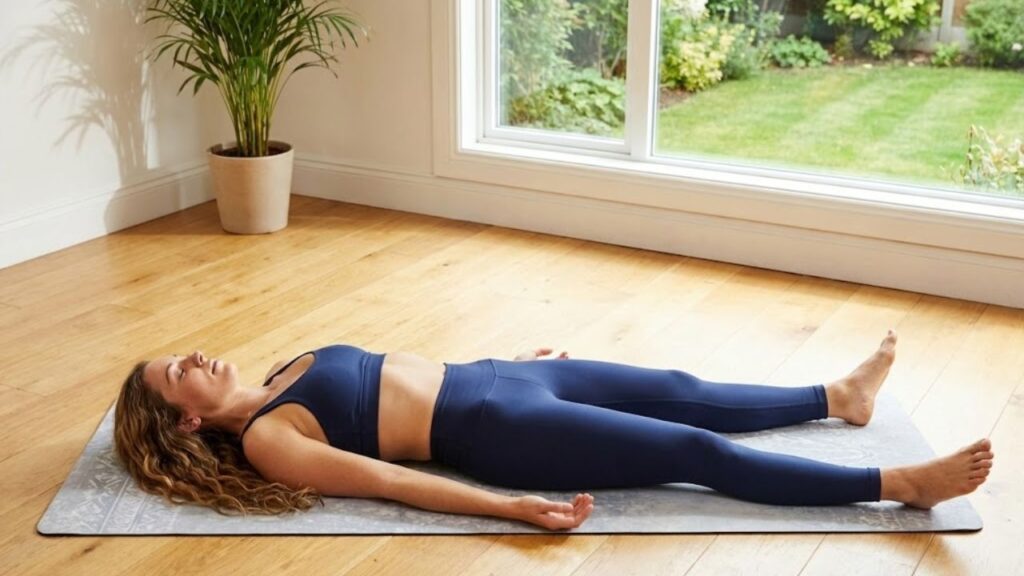
Corpse Pose, which is frequently performed at the conclusion of yoga classes, is beneficial for attaining profound relaxation and a calm mind. How to do it: Place your body flat against the surface while lying on your back. Put your arms by your sides and let your feet fall apart organically. Shut your eyes and allow your entire body to unwind on the mattress or floor.
Why it promotes sleep: Both the body and the mind are completely relaxed in this position. It makes it easier for you to fall asleep by releasing any residual tension in your muscles and clearing your mind of racing thoughts.
How long to stay: Hold this pose for three to seven minutes, or as long as it takes you to feel totally at ease. Practical advice: Pay attention to your breathing and gradually count from one to ten.
How to incorporate these poses into your nightly routine
You should practise these poses in a calm area with low lighting for optimal results. Avoid staring at screens and bright lights right before you start. This is an easy sequence to follow. A brief bedtime routine: Legs Up the Wall comes next, followed by Seated Forward Bend, and finally Corpse Pose. It will take seven to ten minutes to complete the entire routine. Instead of worrying about how deep you can stretch, focus on your slow breathing.
Using breathing exercises to improve sleep
Combining Breath Awareness and Yoga Your practice is more effective when you combine yoga with mindful breathing techniques. Inhaling while counting to four and exhaling while counting to six is a basic method. Your brain gets a signal to relax and calm down when you exhale for a longer period of time than you inhale. Keep your breathing soft and natural throughout your practice, as opposed to tense or forced.
Easy routines that promote improved sleep
When combined with healthy evening routines, yoga yields superior results overall. Make sure you finish your meal at least two hours before going to bed. Avoid caffeine in the later hours of the day. For the best sleep, keep your bedroom dark and cool. Make it a point to go to bed at the same time each night. As weeks pass, even a single basic pose performed daily can produce noticeable gains.

Who needs to exercise caution?
Take it easy and avoid staying inverted for prolonged periods of time if you have circulation issues high blood pressure, or spinal injuries. If pregnant women are unsure about forward bends, they should consult a professional. Medication or complex routines are not necessary for improving sleep. Your body can naturally relax with just a few minutes of gentle yoga. These three poses are straightforward, powerful, and simple to perform each night.